
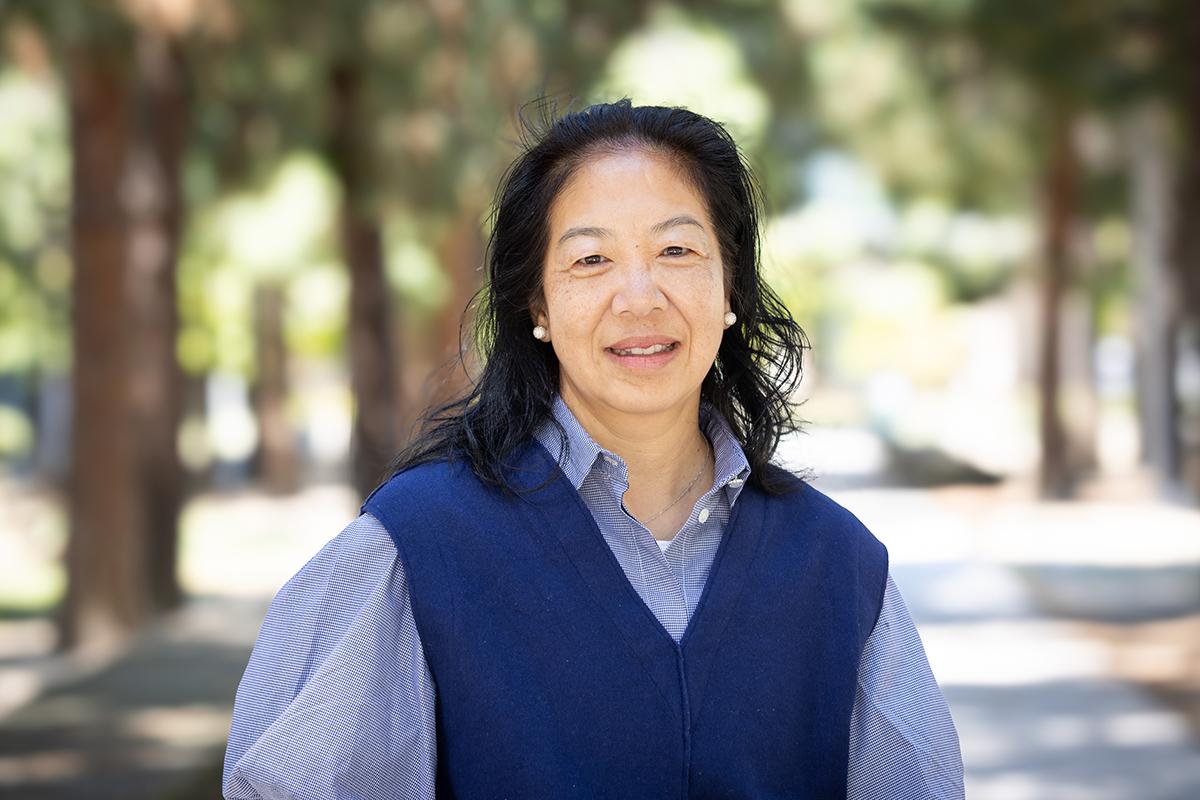
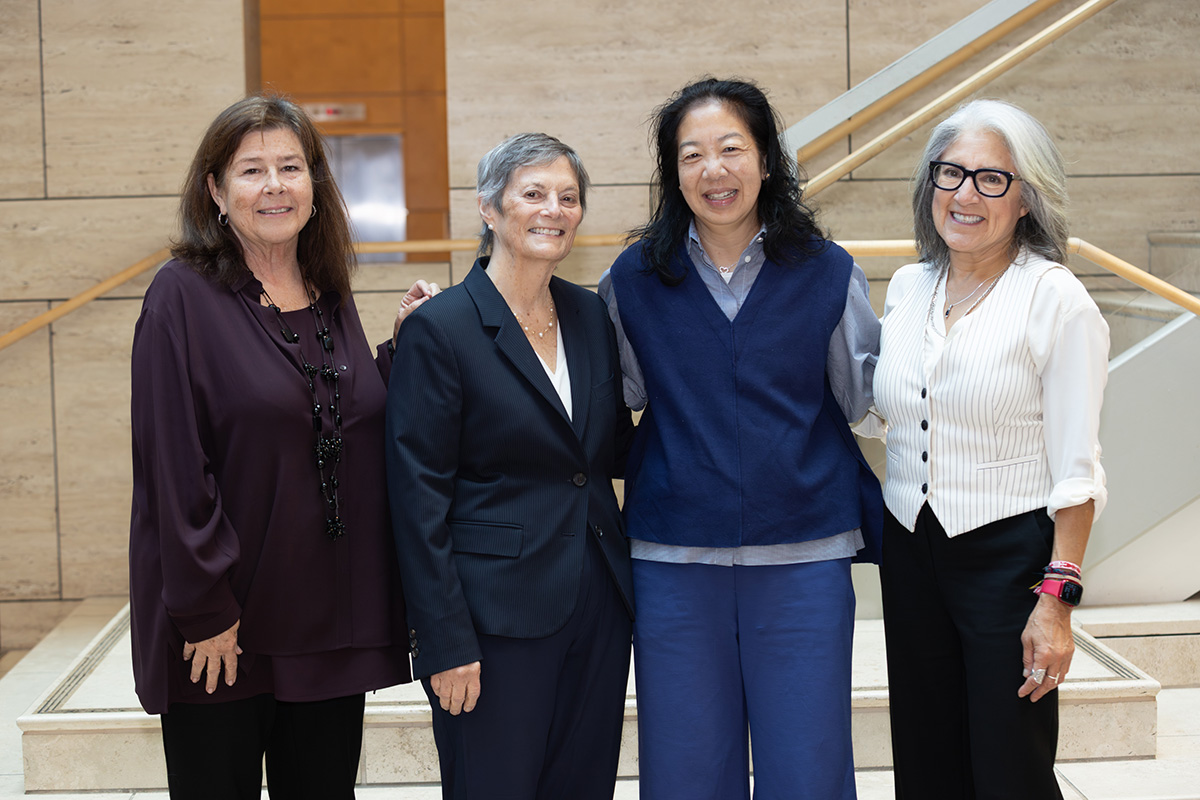
Sabrina Wong, PhD, FAAN, FCAHS, the recipient of the 2026 Helen Nahm Research Lecture Award. (Photography by Elisabeth Fall)
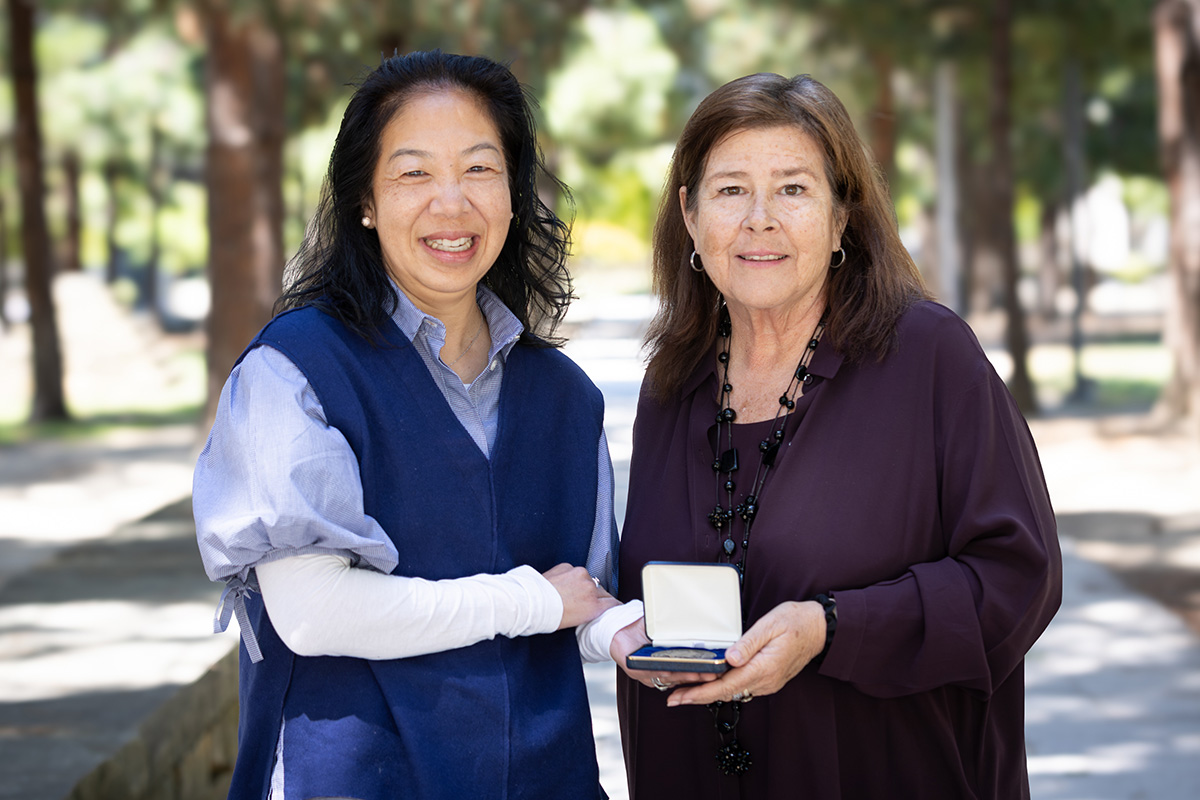
Sabrina Wong, PhD, FAAN, FCAHS, an expert in the organization and delivery of primary health care in Canada and internationally, has been named the 45th Helen Nahm Research Lecture Award recipient by the UCSF School of Nursing, in recognition of outstanding contributions to nursing science and research.
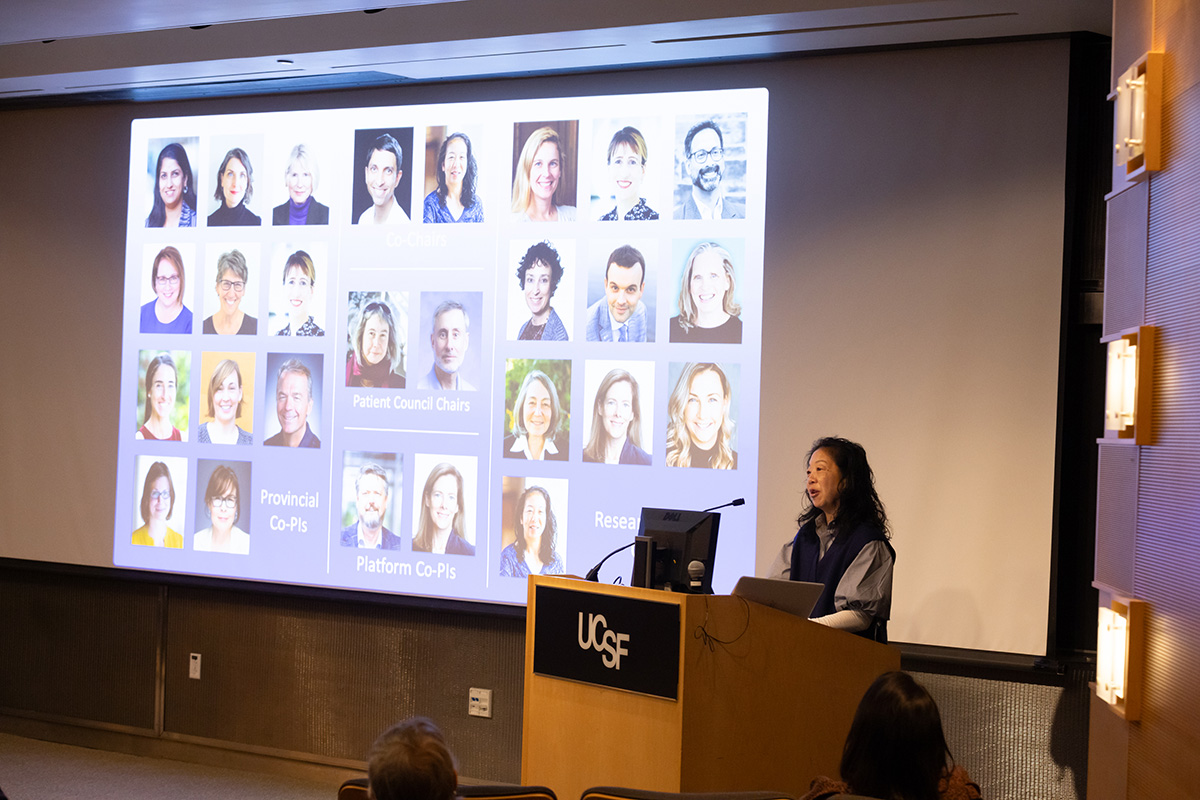
Wong delivered her lecture, "Informing and Transforming Primary Care: Lessons from the Canadian Primary Care Research Network,” to an audience of colleagues and friends on May 6, the first day of National Nurses Week 2026, at the UCSF Mission Bay campus.
A professor at the University of British Columbia (UBC) School of Nursing and Centre for Health Services and Policy Research, Wong was the first Asian Canadian or Asian American woman to hold the position of scientific director at the National Institute of Nursing Research (NINR) at the U.S. National Institutes of Health (NIH), where she worked with NIH intramural colleagues to further research on the social determinants of health.
Now, in addition to her UBC faculty role, she serves as science lead for the British Columbia (BC) node of the Strategy for Patient Oriented Research Primary and Integrated Health Care Innovation Network at the Canadian Institutes for Health Research and co-director of the BC Primary Care Sentinel Surveillance Network. She is also the co-chair of the Canadian Primary Care Research Network.
Anchored, Aligned, Accountable
In her talk, Wong, an alum of the UCSF PhD in Nursing program, spoke of her experience as president of the graduate student association during the development of UCSF’s Mission Bay campus.
To ensure the university fulfilled its student housing commitments, she spent hours strategizing, poring through detailed plans and documents, and attending high-level meetings that included the UC regents. UCSF students are still reaping benefits from her hard work today, with a variety of university-owned apartments in the area available to them at below-market rates.
"The foray into policy, into doing something for the greater good, lit a fire for me,” she said.
Wong then described the path she took from postdoctoral scholar at the UCSF Philip R. Lee Institute for Health Policy Studies to faculty member at UBC, where she has managed a research portfolio with impacts in health equity, electronic medical record (EMR) data management, and performance measurement and reporting.
Wong noted the importance of creating and sustaining strong relationships in the effort to effect real and lasting change. “If the vision is to transform a system, then you have to do more than keep your nose to the grindstone,” she said. “Doing good science is not sufficient to move the dial.”
She also stressed the value of learning to take risks. To keep projects moving forward that were beyond her individual control, “I had to get comfortable with being uncomfortable.”
Wong concluded by offering the audience her “three A’s,” the principles she has used to guide her career: “Anchor what matters most to you,” she said. “Align your values with your science.”
And know to whom or what you are accountable. “There are times where it feels thankless,” Wong said. “However, I have a strong sense of personal accountability to Canada, to building research capacity, and to strengthening primary care for all.”