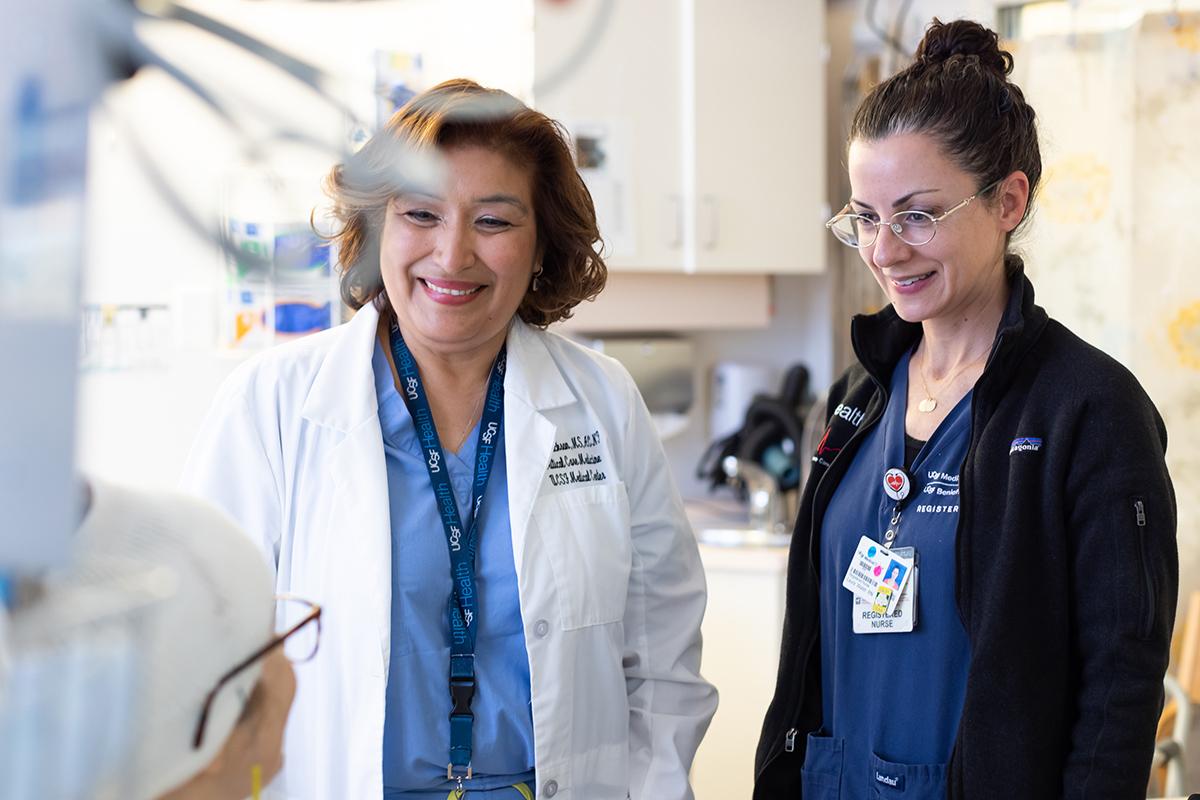
Rubi Alva de Hickson, DNP ’24, ACNP-BC, PHN, has pursued a passion for health policy and advocacy since receiving her doctorate from UCSF. (Photography by Elisabeth Fall)
Leading the Charge: DNP Alumni Champion Positive Change
Toby Marsh, DNP ’25, RN, FACHE, senior vice president of National Patient Care Services and chief nurse executive for Kaiser Permanente, oversees more than 78,000 nurses serving nearly 13 million people — and he recognizes the gravity of the job he’s been called to do.
“As nurses, we see the highest of the highs, the lowest of the lows, throughout our professional practice,” said Marsh. “We have an intimate seat into people’s lives.
“It’s humbling, and it’s a privilege to do this work.”
With an eye for innovation and improved quality of care, he and his fellow graduates of the UCSF School of Nursing Post-Master's Entry to the Doctor of Nursing Practice (DNP) pathway are leading the future of health care systems, health care education, and national health policy, thanks in part to the preparation they received at UCSF.
Changing Health Care Systems With a Patient Focus
In his role at Kaiser Permanente, Marsh directs hiring and staffing efforts, clinical quality, patient safety, standards of care, and education and professional development for nurses across 41 hospitals and more than 600 outpatient facilities.
A former U.S. Air Force officer, he spent nearly 20 years progressing through the ranks at UC Davis Health, where he served for six years as chief nursing and patient care services officer. Marsh joined Kaiser Permanente’s Northern California team as regional chief nursing executive in 2022, and he began his doctoral program the next fall.
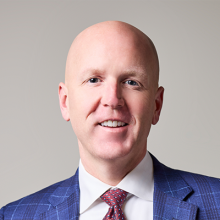
“My DNP came at the right moment in my career," he said. “I saw the terminal degree as a way to prepare myself to be in forums where I could well represent our profession.”
He credited the program for helping him reinforce strong, evidence-based frameworks to advance care quality, patient safety, and the well-being of his clinicians, informed by the most current evidence and outcome data.
“I want to create an environment that creates frictionless experiences, so our team members can be authentically present with those they are caring for,” he said.
As a seasoned nurse leader, Marsh appreciated how the program challenged him. “The faculty pushed me in ways I didn’t think possible,” he said. “I’ve come out on the other side stronger because of it.”
Training Tomorrow’s Caregivers and Providing Quality Care
The nursing workforce is facing a well-documented labor shortage that is expected to intensify as the need for health care grows. But the solution is not as simple as just training more nurses. It requires preparing the educators required to teach them — and UCSF is doing just that.
Amber Ramage, DNP '25, EdM, FNP-BC, is an assistant clinical professor at the UC Davis Betty Irene Moore School of Nursing, where she incorporates the lessons she learned from her UCSF doctoral program into the curriculum she designs for her students.
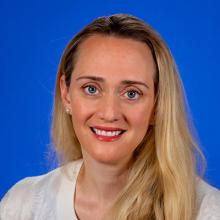
“I love teaching,” she said. “I also wanted to reflect on my profession, and on patient care and outcomes, and how I could have a bigger impact.”
In her unique clinician-educator role, Ramage divides her time between the classroom and the exam room. She teaches graduate nursing and physician assistant students in small groups and clinical skills workshops, while also serving as a nurse practitioner at the Sacramento County Refugee Health Clinic.
Ramage found a great deal of value in the network she built during her degree program.
“I learned so much from my classmates,” she said, highlighting the diverse experiences of her cohort, which featured fellow professors and instructors, nurse executives, community activists, and nonprofit leaders. “They brought so much to the table.”
And Ramage discovered a bonus benefit to going back to school: an increased sense of empathy. She feels better able to advise her mentees after having so recently navigated papers, projects, and exam periods herself.
“It puts you back in the mind frame of the students,” she said. “I have more understanding and compassion for them.”
Redefining Policy and Advocating for Change
Rubi Alva de Hickson, DNP ’24, ACNP-BC, PHN, a critical care nurse practitioner at UCSF Health, has spent more than 30 years caring for some of the sickest patients.
While pursuing her DNP, Alva de Hickson found a new way to care for her community: advocacy. While still in school, she started a campaign to change the Spanish translation of “nurse practitioner” used in California law to better reflect the title's training and responsibilities.
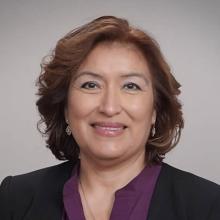
In recognition of her efforts, she received the 2025 President’s Award from the National Association of Hispanic Nurses (NAHN), the nation’s leading professional society for Latinx/Hispanic nurses. And for the past two years, she has served as chair of NAHN’s national policy and advocacy committee and the NAHN Hispanic Health Policy Summit in Washington, D.C.
Her scope has widened considerably as a member of the national committee. She has worked with colleagues to develop an immigration toolkit to help nurses protect their patients’ privacy and to launch the organization’s first bill tracker for legislative activities of interest to the Latinx/Hispanic nursing community, among a long list of additional accomplishments.
“We are mandated ethically by the American Nurses Association code of conduct to lend our voices for the benefit of our patients, our profession, and the people that we serve,” Alva de Hickson said.
The success she’s seen with NAHN and her other advocacy efforts has inspired her to return to the classroom once again. She is currently pursuing a JD at the Northwestern California University School of Law and expects to earn her degree in 2029.
“I want to be able to write these laws. That’s where I think I can best help our nursing profession,” she said.
"If we do not have a seat at the table where these policies are made, our voices and our perspectives are not heard.”