Meet Four UCSF Experts Driving Innovation in Patient Care
Access to high quality, affordable health care is a global problem. UCSF faculty and alumni are constantly looking for ways to make care both better and less costly so anybody, anywhere can get the care and services they need. Here are four examples of work being done right now, in everything from emergency department rounding to cancer screenings.
Nurse Rounding Improves Patient Satisfaction
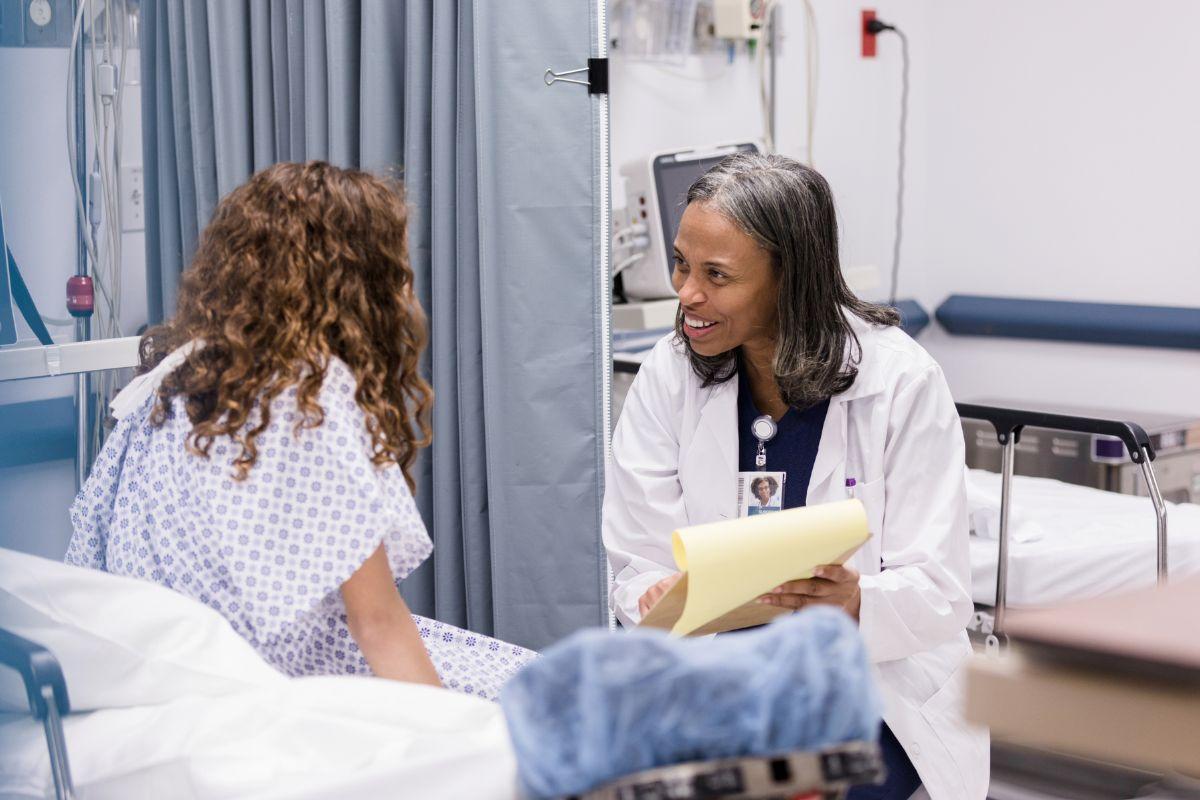
When Stanford Health Care moved their emergency department to a new location in 2019, they noticed a surprising consequence: patient satisfaction scores plummeted. Karen Stuart, DNP ’25, RN, NEA-BC, director of emergency services at Stanford Health Care, decided to do something about it.
At the time, Stuart was a Doctor of Nursing Practice (DNP) student at the UCSF School of Nursing, enrolled in the school’s Post-Master’s pathway. DNP students are required to design and present a quality improvement project on a health care practice issue, so Stuart chose to design a project to address the emergency department’s patient satisfaction scores.
She started with a systematic review of literature on patient satisfaction scores, scouring literature for what worked in emergency departments specifically, and from that research, created a new rounding protocol for 12 nurse leaders at the health care system.
But instead of merely suggesting that the nurse leaders engage in the new protocol, time was blocked in their calendars “so that they had the time to go and do rounding,” said Stuart. She and her research team also asked for feedback to see what problems nurse leaders might encounter in keeping these scheduled events. Over a two-month period, nurse leaders completed nearly 1,000 rounds in the emergency department.
It worked, with results exceeding expectations. Stanford Health Care set a goal to increase the “likely to recommend from patients” metric by 5%. It leaped by 32%. They also set a goal to increase the “staff cared about you as a person” metric by 5% and saw a 23.9% increase.
The protocol helped leaders too, with a 12% increase in nurse leader confidence. “Leaders received positive feedback and found it really rewarding because they were seeing the good things that were happening in the department,” Stuart said.

Improving Access to Cervical Cancer Screenings in Rwanda
When caught early, cervical cancer has a 91% five-year survival rate, according to the American Cancer Society. “Caught early” is key. Routine screenings are life-saving. The survival rate drops to only 20% if the cancer has spread to nearby organs.
But in countries like Rwanda, there are significant barriers to getting those screenings, which is where Calvin Chiu, PhD, MA, assistant professor, hopes self-collection kits come in.
In a 2025 study conducted in coordination with the Rwandan government and Goodlife, a private pharmacy chain, Chiu and his research colleagues ran a three-month pilot program at 12 Goodlife pharmacy locations in Rwanda, where women were able to collect a cervical cancer sample on their own at the pharmacy. The research team is currently analyzing the results to understand if self-collection kits are effective in improving screening rates and ultimately in improving cervical cancer outcomes.
Researchers are specifically looking in Rwanda because the country is currently running a campaign to end cervical cancer, Chiu said. Cervical cancer is the second most frequent cancer in women in Rwanda, and the first most frequent cancer in women between the ages of 15 and 44, according to the ICO/IARC Information Centre on HPV and Cancer. But visiting a clinic for a screening often involves hours of waiting to be seen. Some women may also feel a stigma of being swabbed by a doctor. Self-collection jumps these hurdles.
If this is successful, what other conditions could be addressed through self-collection? Chiu could see pharmacies significantly improving access to early screenings by turning into a “one-stop shop where you can get breast cancer screening, cervical cancer screening, diabetes screening — everything without having to go to a clinic,” he said.
Using Acupuncture to Help Military Service Members and Veterans
Acupuncture has long been used to treat different maladies — everything from migraines to arthritis. It can lower cortisol levels and other markers that show inflammation in the body, which is why it’s being studied as a potential treatment for mental health conditions and stress.
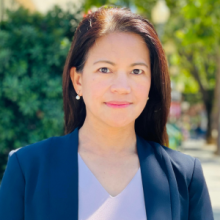
One person doing such research is Jane Abanes, PhD, DNP, PMHNP, assistant professor in the School of Nursing and the coordinator of the Psychiatric Mental Health Nurse Practitioner specialty. She’s exploring how acupuncture can be used to treat PTSD and stress in active-duty service members.
A veteran of the U.S. Navy herself, where she served as a psychiatric mental health nurse practitioner, Abanes saw first-hand how military service members were suffering from the impacts of PTSD and other stressors, which inspired her to pursue training in how body acupuncture and auricular (in the ear) acupuncture could be used to treat her patients.
“I found that service members not only appreciated the acupuncture part of treatment, but had also gotten better,” she said.
In a recently completed randomized clinical trial, which was funded by the TriService Nursing Research Program (TSNRP), 67 military members were given either mindfulness training or mindfulness training plus body acupuncture.
Those who had acupuncture treatments had statistically significant higher scores in general health, mental health, and role functioning, which refers to an individual's capacity to fulfill typical daily responsibilities. Abanes will present her findings to TSNRP this March.
She is now starting a two-year study exploring the impact of auricular acupuncture on emotional distress in service members and veterans with PTSD, also funded by TSNRP.
“When levels of stress are lower, a lot of things get better, and I’m hoping to learn more about how that’s achieved through acupuncture," Abanes said.
Asking Cancer Patients — Directly — What They’re Going Through
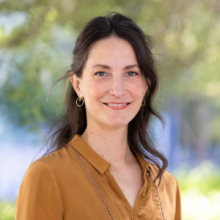
Most studies on the side effects of cancer treatment rely on clinician-reported data. Few studies have asked patients how they’re doing with treatment. Carolyn Harris, PhD ‘22, RN, OCN, assistant professor, is changing that. She is currently enrolling patients with skin cancer being treated with immune checkpoint inhibitor therapy in a new study. Participants will give frequent and direct reporting of what symptoms and challenges they’re experiencing.
Harris hopes to enroll 300 patients into this study by 2027. Study participants will complete surveys prior to each of their first four cycles of the treatment. Surveys include questions about finances and stress levels, measuring how these factors change over time. They will also be asked about stigma — whether from body changes that come from surgery or the development of autoimmune disorders like vitiligo, or stigma from having skin cancer in general, which can sometimes be unjustly blamed on the patient.
This kind of study is particularly timely because participants will be receiving immune checkpoint inhibitors, a relatively new treatment. These inhibitors have increased survival rates for multiple cancers, but their side effects have not been deeply studied.
To fully understand potential treatment options for cancer, says Harris, “We should be asking patients what they’re going through.”